
The holidays are often a time for family, warmth, and togetherness. When dementia is part of the family, the season may look different, but it can still be meaningful. Joy does not disappear because dementia is present. Many families find that joy becomes quieter, slower, and more focused on simple moments.
Dementia changes how a person understands the world. It can affect memory, thinking, and communication. Busy schedules, loud gatherings, and sudden changes can feel overwhelming. Still, people living with dementia can feel love, comfort, and happiness. With the right approach, families can create holiday moments that feel calm, respectful, and joyful for everyone.
This article shares how families can find joy during the holidays when dementia is part of the family, while keeping celebrations simple, supportive, and full of heart.
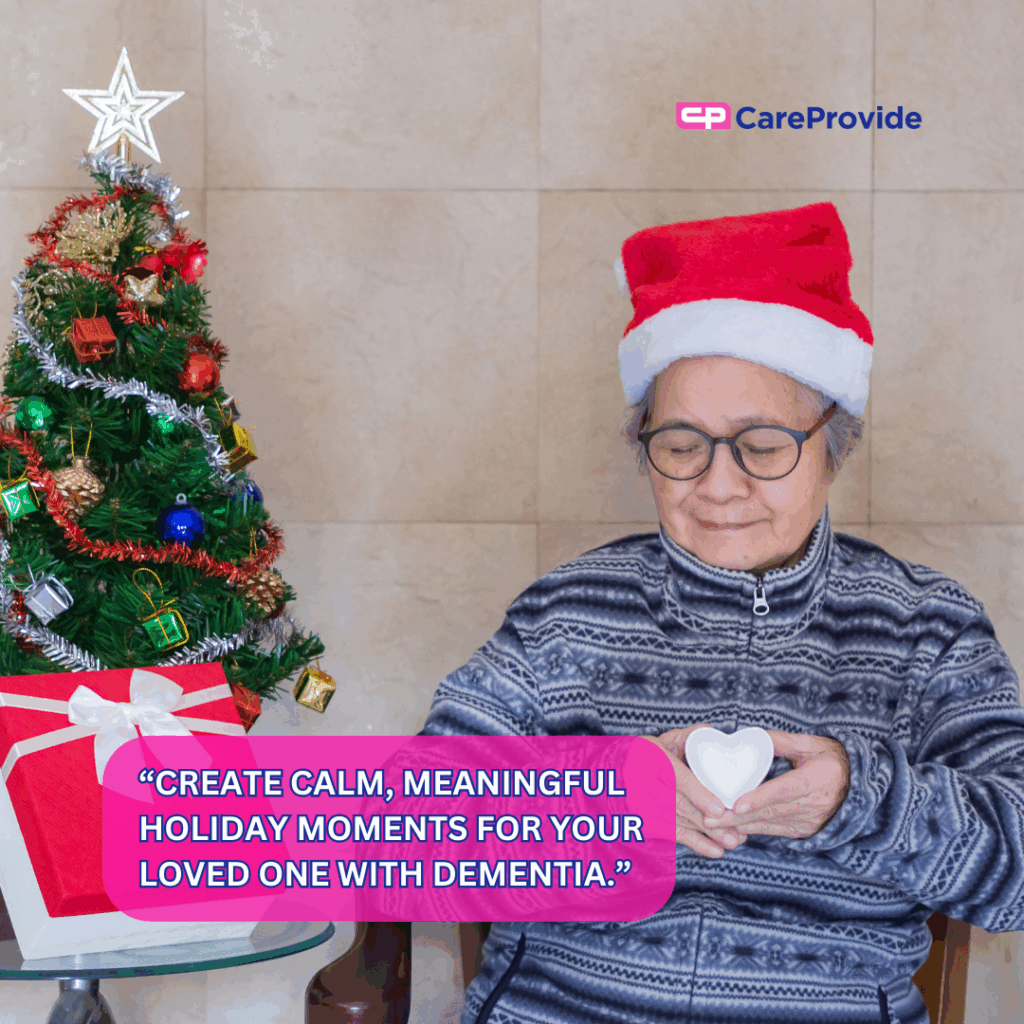
How Dementia Affects the Holiday Season
Dementia can make the holidays confusing for a loved one. Decorations may feel unfamiliar. New faces or large groups may cause stress. Changes in routine can lead to anxiety or withdrawal.
A person living with dementia may not understand why the house feels busy or why people are visiting. They may repeat questions or seem unsure of what is happening. This is not intentional. It is part of how dementia affects the brain.
When families understand this, they can adjust how they celebrate. Instead of focusing on traditions that feel stressful, they can focus on comfort. A calm tone, familiar faces, and a steady routine help a loved one feel safe.
When the environment feels safe, joy becomes easier to find.
Redefining Joy During the Holidays With Dementia
Joy does not need to look the same as it did before. For families living with dementia, joy often comes from small and simple moments.
A familiar song can bring comfort. A favorite food can spark happiness. Sitting together in a quiet room can feel more meaningful than a big celebration. These moments may not seem special from the outside, but they matter deeply.
People living with dementia often respond more to feelings than facts. Even if they do not remember the holiday, they can still feel warmth, kindness, and love. Emotional memory often stays longer than short-term memory.
When families let go of pressure and allow joy to be simple, the holidays feel more peaceful and real.
Creating Calm and Familiar Holiday Moments
Familiarity helps people living with dementia feel grounded. During the holidays, keeping things familiar can reduce stress and confusion.
Simple traditions often work best. Playing well-known holiday music, using familiar decorations, or serving favorite meals can bring comfort. Keeping routines close to normal also helps a loved one feel more secure.
Many families choose smaller gatherings or shorter visits. A quiet space where a loved one can rest is also helpful. These small changes can make a big difference.
A calm holiday does not mean a boring holiday. It means a celebration that feels safe, gentle, and welcoming.
Staying Connected Without Pressure
As dementia progresses, conversation may become harder. A loved one may struggle to follow discussions or find the right words. This can feel difficult during family gatherings.
Connection does not depend on talking. Being present is often enough.
Sitting together, listening to music, or holding hands can create strong emotional bonds. These quiet moments allow connection without stress or expectations.
When families remove pressure to talk or participate fully, loved ones often feel more relaxed. These moments of calm presence often become the most meaningful part of the holiday.
Supporting Caregivers and Letting Go of Perfection
Caregivers often feel pressure during the holidays. They may try to make everything feel normal or joyful for everyone. This can be exhausting.
It is okay to let go of perfection. Holidays do not need to be busy or impressive to be meaningful. Simple plans and clear boundaries protect both caregivers and loved ones.
Caregivers also deserve care. Accepting help, taking breaks, and allowing mixed emotions are all part of healthy caregiving. Feeling tired or sad does not mean you are ungrateful. It means you are human.
When caregivers care for themselves, they create space for real joy to grow.
Finding Meaning in What Still Matters
Dementia changes many things, but it does not take away love, dignity, or connection. The holidays are not about remembering every detail. They are about feeling safe, included, and cared for.
A shared smile, a calm afternoon, or a familiar song can hold deep meaning. These moments may be quiet, but they are real.
If dementia is part of your family, you are not doing the holidays wrong. You are adapting with care and compassion. Joy is still there. It may look different, but it is just as valuable.
📞 For families seeking caregiving support/services: Our compassionate caregivers are here to help. Call us at (647) 771.2273.